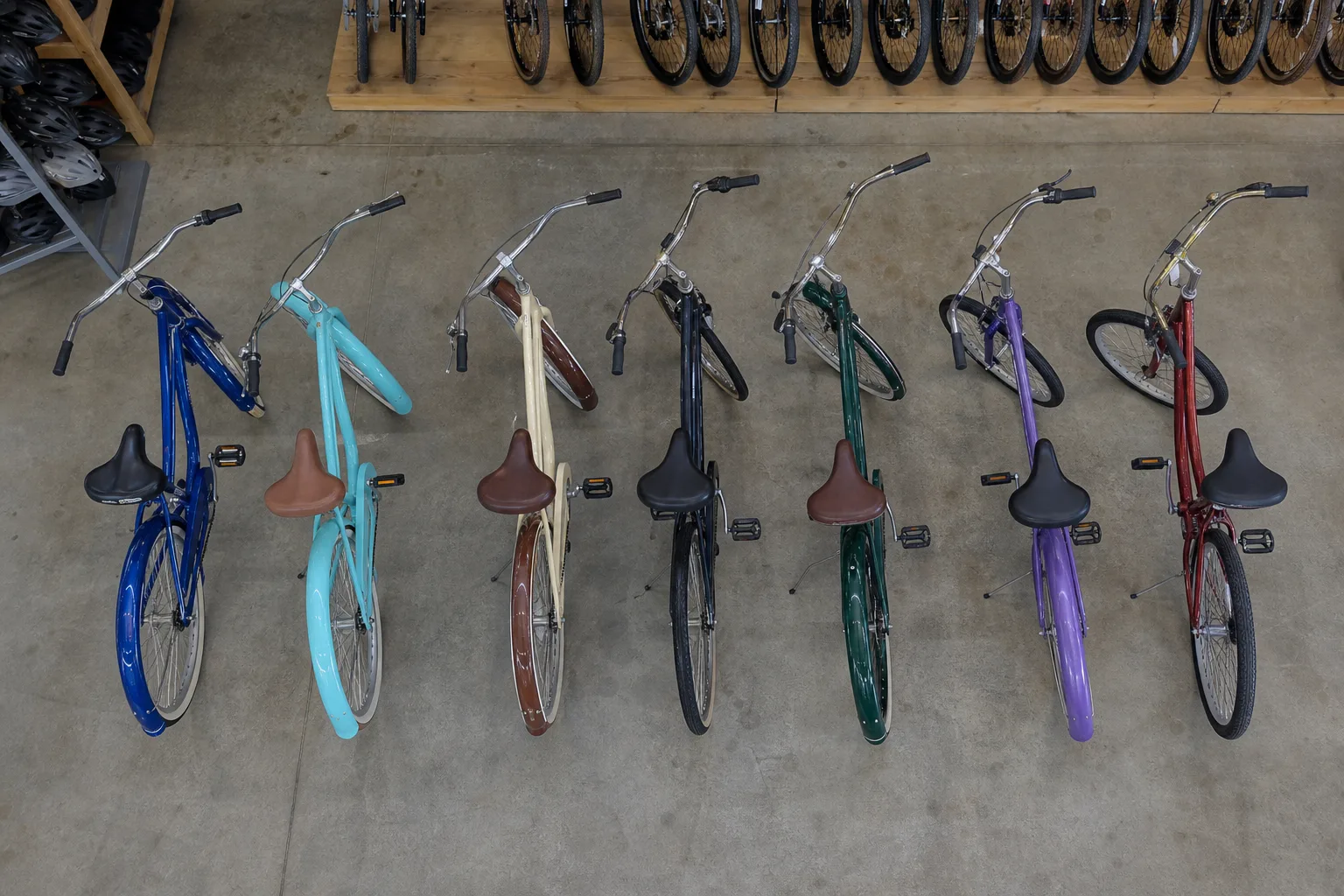
Two bikes hanging side by side in the same store aisle, both labeled medium, both sold as step-through comfort bikes, can put your feet, hands and seat in places that differ by two or three inches. The label is a manufacturing convenience, not a promise about your body, and the numbers that actually govern whether you will enjoy a two-mile ride to the library are printed on the hang tag or the brand's spec page in small type. Three of them matter for upright riding: standover, top tube slope and reach. All three can be checked before you pay.
Standover tells you about mounting, not about fit
Standover is the height of the top tube at the point where you would straddle it, measured from the ground. On a deeply dropped step-through it may be twelve or fourteen inches, low enough that you swing a foot through rather than over, and that is the whole point of the shape: it accommodates stiff hips, long skirts, panniers and stops at traffic lights where you would rather stay seated over the frame than balance on a toe. What standover does not tell you is whether the saddle and grips will land correctly. A frame can be easy to mount and still stretch you out uncomfortably once you are on it.
Top tube slope changes the shape, not the size
Slope is the angle at which that tube runs from the head tube back to the seat tube, and manufacturers use it to open up entry without changing the two contact points that determine comfort. A cruiser with a nearly level top tube and a step-through with a tube dropping steeply toward the bottom bracket can share the same seat tube length, the same wheelbase and the same handlebar sweep, which means they ride nearly identically once you are pedaling. That is why the shape is a design choice about getting on and off rather than a statement about who the bike is for or how tall the rider should be.
Reach is the number that decides the ride
Reach is the horizontal distance from the saddle to the grips, and it is set by effective top tube length, stem length and how far the handlebar sweeps back toward you. On upright bikes the swept bar does a great deal of work, pulling your hands close enough that your back stays near vertical and your weight rests on the saddle instead of your wrists. Two frames of identical stated size with bars that sweep back differently will feel like different bicycles. When you compare spec sheets, look for effective top tube length and note the bar, because those two together tell you more than the size letter ever will.
What a women's model usually changes
Frames marketed to women most often differ in a slightly steeper seat tube angle, a marginally shorter effective top tube, narrower grips, and a wider, shorter stock saddle with a center relief channel. Those are real differences and some riders prefer every one of them, but none of them is exclusive to any body, and the saddle is a part you can swap in ten minutes for thirty or forty dollars. Bicycle construction and safety requirements fall under the Consumer Product Safety Commission, which regulates the machines themselves and takes no position on which shape belongs to which rider. Judge the geometry, then judge the saddle separately.
The two-minute check in the parking lot
Straddle the bike flat-footed and confirm there is clearance, then set the saddle so that with the pedal at its lowest point your knee holds a slight bend, roughly the angle of a leg standing at ease. Ride slow figures of eight and one straight line, hands loose on the grips. Watch for three things: whether you can reach the brake levers without shifting your grip, whether your shoulders round forward or stay open, and whether you can put a foot down without tilting the bike far. If the reach is wrong you will feel it in your wrists within a block, and a shorter stem or a more swept bar will fix it for well under a hundred dollars.
Take a photo of the geometry chart on the hang tag before you leave, along with the effective top tube number, and compare it to the next bike you sit on. Once you know which reach suits you, that measurement travels with you across brands, price tiers and both frame shapes.