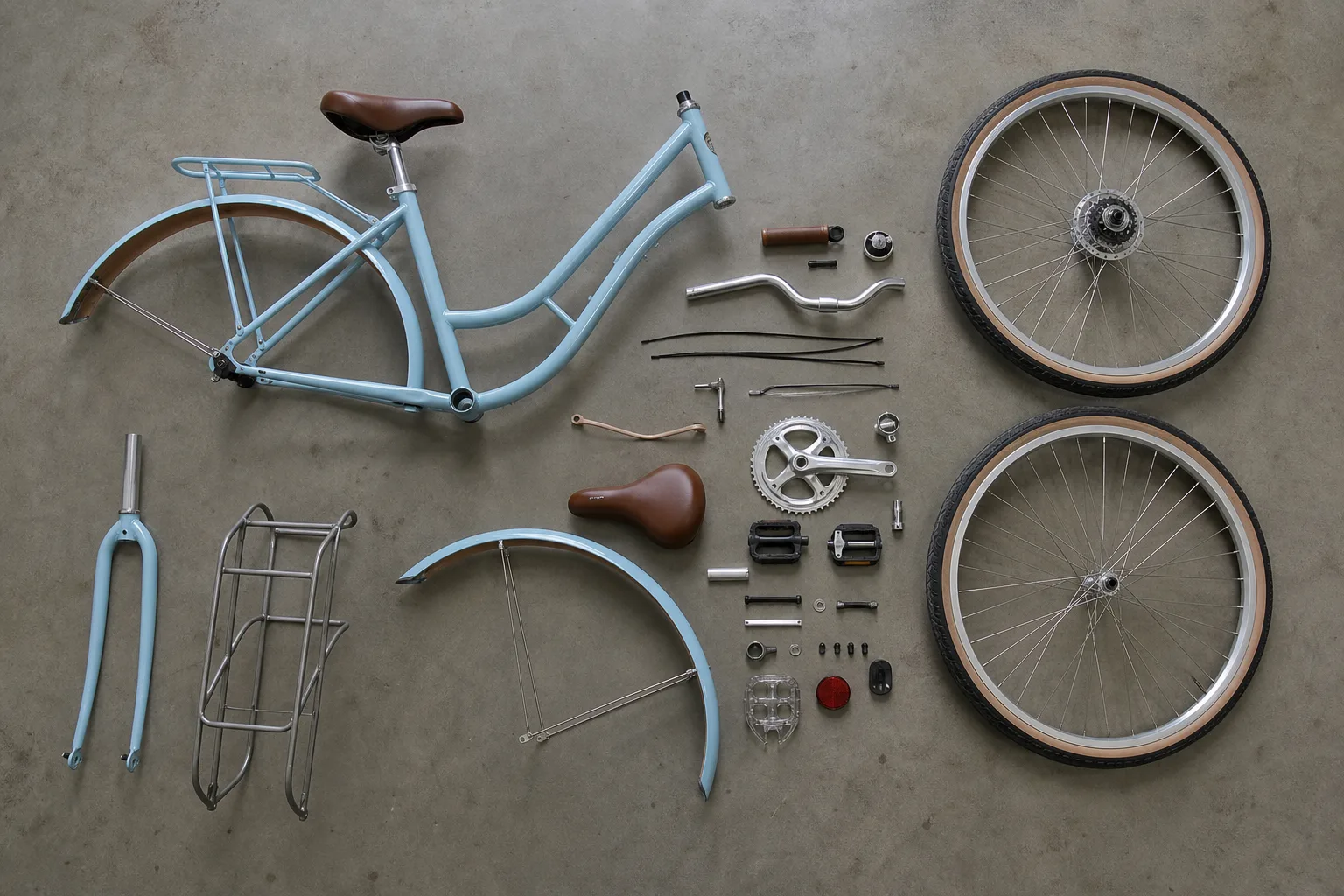
The sticker on a step-through cruiser is a deposit against a total that only becomes visible over the first two months of riding. Some of that total is one-time and predictable, the tune-up after the cables settle, and some of it is discretionary, the saddle you replace because the stock one was chosen for a showroom rather than a two-mile ride to the market. A careful reader can forecast nearly all of it before paying, because the same five costs turn up on almost every purchase, in the same order, whether the bike came flat in a carton or rolled off a shop floor fully built.
1. The price band buys labor, not just parts
Across the market, the gap between the cheapest boxed cruiser and a comparable shop-built one is mostly assembly time, wheel truing, and a mechanic who will see the bike again. The frames are often similar in shape and weight, the differences concentrating in hubs, bearings, and whether the wheels were tensioned by a person or a machine. Buying at the low end is defensible, but the money saved is money you will either spend later at a shop or pay in your own labor. Decide which before you buy, because that choice sets everything downstream.
2. Assembly and the first tune-up are separate line items
A boxed bike arrives with the fork installed, the handlebar loose, the front wheel out, and pedals in a small bag, which is roughly an hour for someone who has done it and an afternoon for someone who has not. Shops will assemble a bike bought elsewhere, usually at a flat rate, and many will decline liability for the frame while still standing behind their own work. Then, thirty to sixty days in, cables stretch and spokes seat, and the bike needs a second visit. The Consumer Product Safety Commission is responsible for the federal requirements that govern how bicycles are sold and what must be assembled correctly before they leave a store.
3. The four parts that get swapped, almost every time
Saddles come first, because upright geometry puts weight straight down and a narrow perch that suits a leaned-forward rider becomes intolerable at fifteen minutes. Grips follow, since stock rubber is often hard and undersized for anyone who rides without gloves. Pedals go next, the thin plastic platforms cracking or simply feeling small underfoot. Tires are the fourth, and the most worthwhile, since a puncture-resistant casing at a comfortable pressure changes both the ride and how often you handle a wheel by the roadside. Budget for at least two of the four rather than being surprised by all four.
4. What a careful reader checks before handing over money
Ask what the price includes: assembly, the first adjustment, and whether either is transferable if you move. Spin both wheels and watch the rim pass the brake pad for wobble. Squeeze the brake levers and see how far they travel before firming up, and on a coaster brake, back-pedal and feel whether it engages smoothly or with a lurch. Check that the fenders do not rub, that the chain has a little slack but not much, and that the kickstand actually holds a loaded basket upright. Written answers to these questions are worth more than a discount.
5. Rust and chain upkeep near salt air
A bike stored outside, or three blocks from the water, ages on a different clock than one kept in a hallway closet. Chains are the first casualty, orange within weeks if left unlubricated, and a chain that rusts stiff will wear the cogs it runs on. A wet lubricant sheds water better than a dry one in coastal air, and wiping the chain down after rain costs a minute. Cables, spokes, and chrome fenders all benefit from the same attention. A fitted cover and a wall hook, together cheap, buy back most of the difference between indoor and outdoor life.
Total the whole thing before you commit: purchase, assembly, the thirty-day adjustment, two or three comfort parts, and a small kit of lubricant, a pump, and a spare tube. That number is stable and knowable, and once you have it, the choice between a boxed bike and a shop-built one becomes a question of where you would rather spend an afternoon.