Flat streets, short rides, ordinary clothes. Where a cruiser stops making sense
A cruiser is built for a narrow set of trips, and the weight, single gear and swept-back bar are only charming inside it. Here is where the line falls, and what crossing it costs.
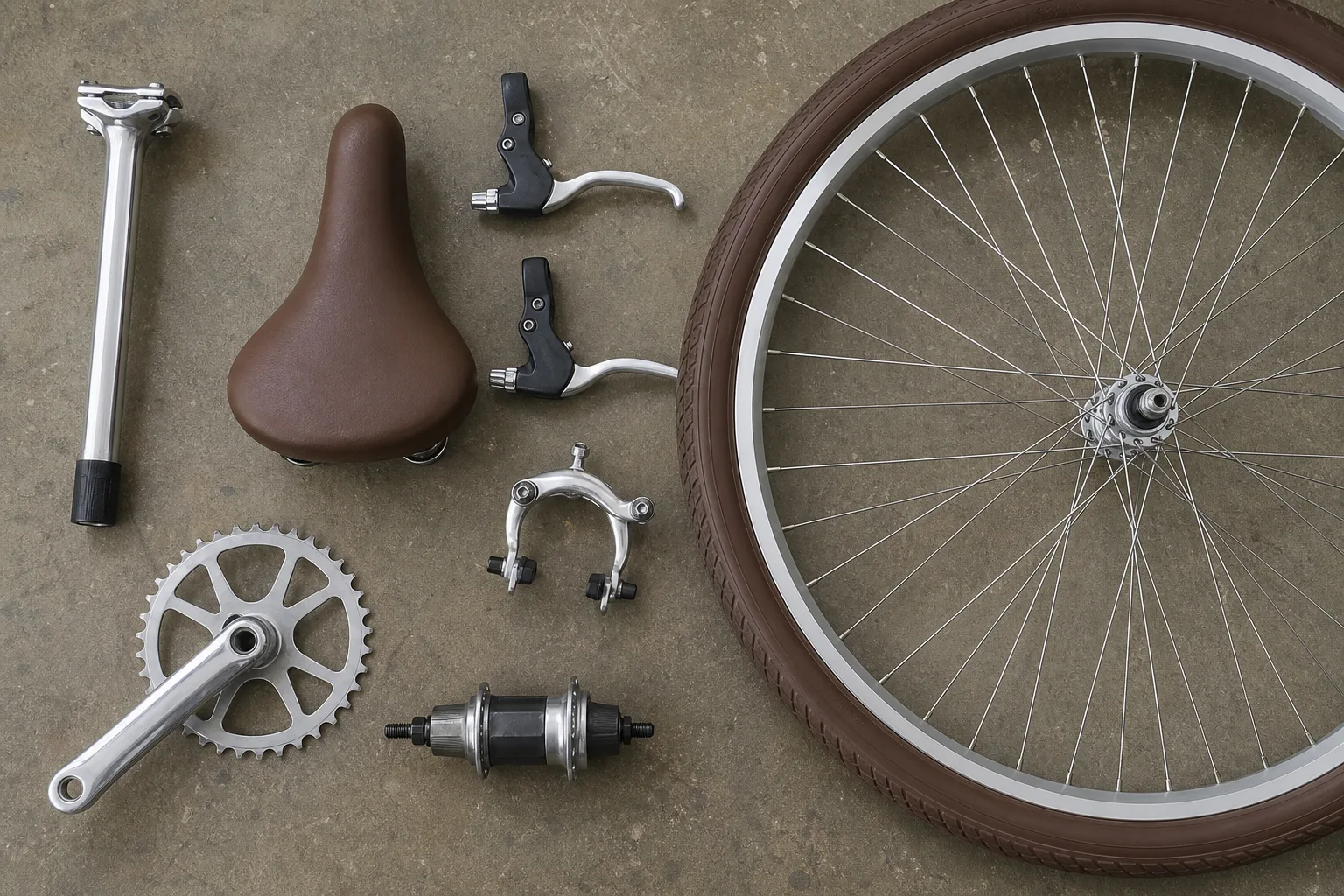
Sit bones, not wrists
An upright posture puts your weight down through the saddle instead of forward onto your hands. That is why cruiser saddles are wide and why narrow performance saddles feel wrong on them.Tire pressure as suspension
Wide tires run at low pressure absorb pavement seams without any moving parts to service. The tradeoff is more rolling resistance, which only matters once distances get long.Where weight actually bites
Extra pounds barely register once a bike is rolling on the flat. They show up when lifting the bike onto a rack, restarting at frequent lights, and on any real grade.| Item | What it means |
|---|---|
| Stairs change the answer | Storage that involves carrying the bike up steps is the most common reason a heavy cruiser stops getting ridden. Measure the lift before you buy, not after. |
| The cheap gear upgrade | Moving from a single speed to a three-speed or seven-speed version of the same frame usually costs less than buyers expect. On any route with a rise, it is the best money in the purchase. |
| Shifting while stopped | An internally geared hub can be shifted standing still at a red light, which a derailleur cannot. That is exactly the moment you want a lower gear. |
- 01
Coaster brake limits
A coaster brake is simple and durable but offers one rate of stopping and no front-wheel braking, where most stopping power lives. Hand brakes on both wheels are worth specifying.
- 02
Handlebar real estate
Swept-back bars leave only short straight sections for mounting lights, a bell or a phone holder. Check clearance before buying accessories that assume a flat bar.
- 03
Federal floor, not a ceiling
New bicycles sold in the United States must meet federal safety requirements covering brakes and reflectors. Meeting that floor is not the same as having brakes you will be glad of in traffic.
On this site
Most people shopping for a cruiser are solving a small, specific problem: two or three miles of flat pavement, done a few times a week, in whatever they put on that morning. That is a real category of trip, and it is badly served by the bikes that dominate shop floors, which are built for people who ride farther and faster than that. The question worth settling before you spend anything is whether your riding actually sits inside that category, or whether it sits just outside it, where the same bike becomes a chore.
The riding this bike is built for
A cruiser is optimized for comfort at low speed over short distances on smooth ground. The saddle is wide because you sit nearly upright and your weight goes straight down through your sit bones rather than forward onto your hands. The tires are fat and run at low pressure, which soaks up expansion joints and rough asphalt without any suspension to maintain. The riding position keeps your head up and your line of sight level, which matters on a boardwalk or a neighborhood street where you are watching for dogs, children and car doors. Inside those conditions, nothing is more pleasant.
The distances involved are genuinely short. A trip that takes fifteen or twenty minutes on a cruiser will take twelve on a hybrid, and the difference is not worth caring about. Stretch that to an eight-mile commute and the gap compounds, because you are carrying more bike, pushing more tire, and holding a position that catches more wind. The bike has not gotten worse. The trip has changed shape underneath it, and the same features that made the first version comfortable now cost you something on every single mile.
Weight, and where you actually feel it
Cruiser frames are steel more often than not, with heavy rims, wide tires and a substantial saddle, and the finished bike commonly lands in a range that a hybrid of similar price undercuts by several pounds. On flat ground, weight barely registers once you are rolling; momentum is on your side and a heavy bike holds speed well. You feel the weight in three places instead: lifting it onto a rack or up a stoop, starting from a dead stop at repeated lights, and on any grade steeper than a parking lot ramp. If none of those describe your week, the weight is a non-issue.
If one of them describes your week every day, price it honestly. Storage that involves stairs, a car rack with a high lift, or a route with a bridge approach all turn a pleasant bike into one that sits unused. The cost of that is not the difference between two price tags. It is the whole purchase, spent on something parked in a garage, which is the most expensive outcome available in this category and the easiest one to avoid by being blunt with yourself about the terrain and the stairs before you order.
One gear, and the grade you did not notice on foot
Single-speed cruisers work because a flat route needs exactly one useful gear ratio, and every gear you remove is a cable, a shifter and a derailleur that will never need adjusting. That is a real saving in money and attention over several years of ownership. The break point is a grade you can feel in your legs but would not call a hill: a long, gentle rise of a few blocks, an overpass, a driveway cut into a slope. On those, one gear means standing on the pedals or walking, and both get old quickly.
Three-speed and seven-speed versions of the same frame exist and typically add a modest amount to the price, less than most people expect. If your route has anything resembling a rise, buy the gears. The upcharge is small, the mechanism is simple, and internally geared hubs in particular can be shifted while stopped at a light, which is exactly when you want a lower gear and cannot get one on a derailleur bike. Shopping a women's beach cruiser bike with a hub gear rather than a single speed is usually the cheapest insurance in the whole decision.
Bars, brakes and what the standards cover
Swept-back bars put your wrists in a neutral position and your shoulders back, which is comfortable for twenty minutes and slightly vague at speed, because the bars are behind the steering axis and the leverage is different from a flat bar. They also narrow your options for mounting lights, bells and phone holders, since the usable straight sections are short. Coaster brakes, common on the plainest models, work reliably but stop you at one rate, cannot be modulated finely, and give you nothing at the front wheel where most braking force lives. Hand brakes on both wheels are worth seeking out.
The Consumer Product Safety Commission is responsible for the federal requirements that new bicycles sold in the United States must meet, including braking performance and reflector placement, so any bike from a legitimate seller clears a floor. That floor is not the same as good, and the difference between a coaster brake and a pair of decent rim or mechanical disc brakes shows up the first time a car turns across your path. This is one of the few upgrades that is difficult to add later and cheap to specify at the time of purchase.
The honest test is your actual route, walked or driven once with the grades in mind, and your actual storage, measured with the stairs counted. A cruiser that matches both will outlast your interest in it. A cruiser bought against a route it was never built for costs the purchase price plus every trip you end up not taking, which is why the five minutes of route-checking is worth more than any spec sheet.